The Impossibility
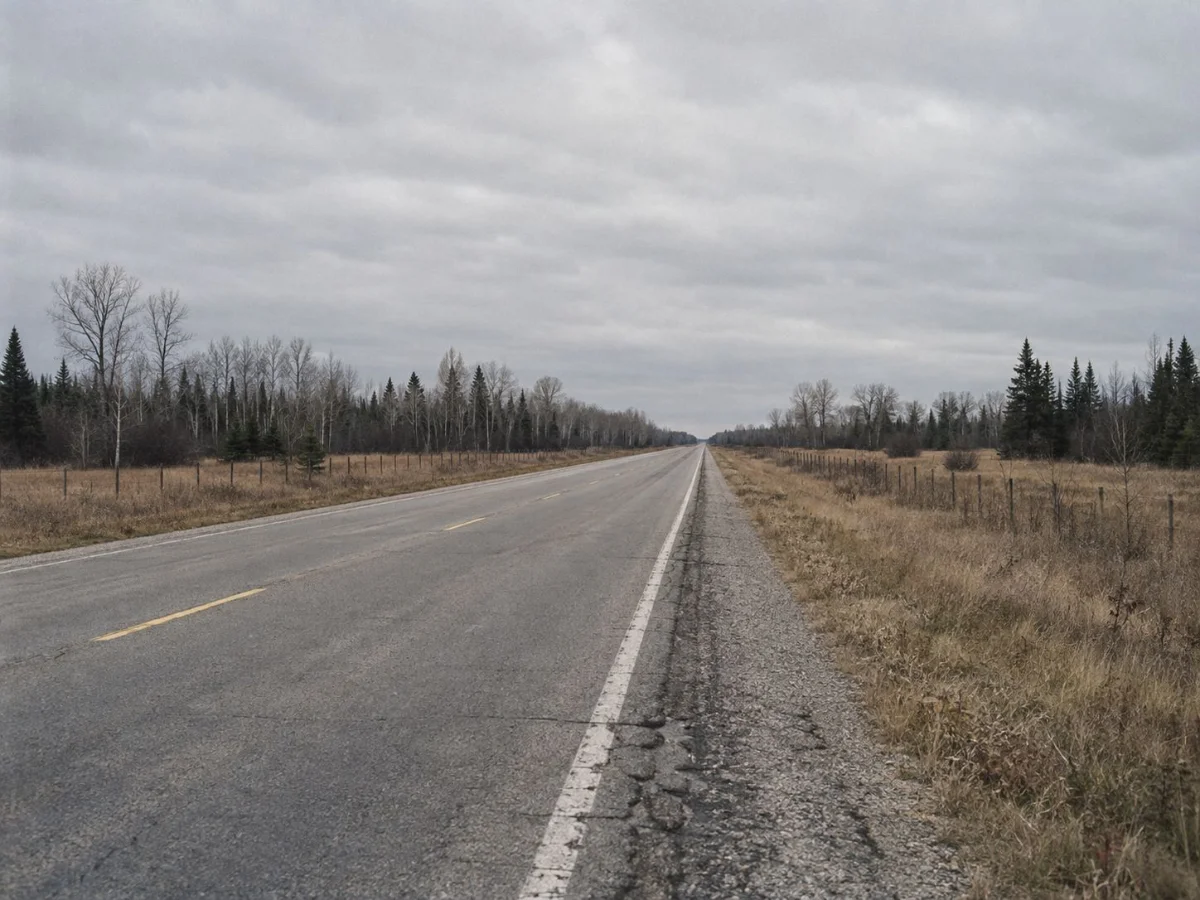
An empty two-lane highway running through northern woods under an overcast sky.

One question has always ruled this case: where was he at 9:00 a.m.?

Scott Macklem was killed by a single shotgun blast shortly before 9:00 a.m. on November 5, 1986, in a parking lot in Port Huron, Michigan.

Temujin Kensu, born Fredrick Freeman, was living near Escanaba, in the Upper Peninsula, about 450 miles away. 

The alibi witnesses

The federal courts counted “nine witnesseswho testified they saw Freeman hundreds of miles away in Escanaba, Michigan, on the day of the murder.” Six of the nine identified him in person that day. The other three fixed the date and tracked his broken car through the afternoon.

COURT RECORD In re Freeman, No. 17-1280 (6th Cir. Oct. 2, 2017), p. 1 · District court opinion, Feb. 8, 2019, in Records

The jury trial timeline

Every entry below is sworn testimony from the 1987 trial.

From Trial Vol. VIII (May 12, 1987.  Escanaba · the defense alibi witnesses Port Huron · the state’s witnesses
Reconstruction: two men at the counter of a Big Boy restaurant at night, the waiter writing an order.
Reconstruction: two cars nose to nose in a restaurant parking lot at night, jumper cables between them.
A man in a winter coat and hat walking away along a sidewalk beside a college parking lot at sunrise.
A small tan car driving out of a college parking lot on a cold, bright morning, seen from behind.
Reconstruction: the front room of a Tae Kwon Do school at midday.
Reconstruction: a man demonstrating a kick in jeans on the school floor.
Reconstruction: a downtown Escanaba sidewalk on a November afternoon.
Reconstruction: a large gold car parked on Main Street, a woman in the passenger seat.
Reconstruction: a man at an auto parts counter near closing time.
Reconstruction: two men talking beside a red car in the K Mart parking lot after dark, the lit storefront behind them.
Reconstruction: two men talking on a residential Escanaba sidewalk at dusk, beside a dark red sedan.
12:05 a.m. · Big Boy restaurant, Escanaba
Illustration of a witness statement.
Scroll or swipe sideways · the card below belongs to the photograph above.
About 12:05 a.m.
About 12:05 a.m.

Big Boy restaurant, Escanaba

Seen by Jeffrey and 1 more.

McNamara was working the overnight 11-to-7 shift when Kensu and Paul DeMars came in for carry-out orders: “a little after twelve, probably five after twelve.”

12:00 to about 1:20–1:30 a.m.

Big Boy parking lot, Escanaba

Seen by Paul.

Kensu called DeMars about midnight: his car was dead in the Big Boy lot. DeMars drove down and jump-started it, and left him “approximately twenty after one, one-thirty.”

8:00 a.m.
8:00 a.m.

A “suspicious man” sighted

Port Huron, 450 miles away

A witness reports a “suspicious man” near a different parking lot. Eight hours earlier, and 450 miles away, two witnesses had Kensu in Escanaba.

8:55–9:00 a.m.
8:55–9:00 a.m.

Scott Macklem is killed

Port Huron

Scott Macklem is killed; a witness glimpses a man leaving the lot. Port Huron is 450 miles from where the witnesses above place Kensu that same day.

About noon
About noon

Chao’s Academy, the Tae Kwon Do school, Escanaba

Seen by Kathleen.

Coming out of the changing room after her 11-to-12 class she found Kensu at the desk, and left “about ten after twelve.” Asked whether there was any doubt it was him: “There’s no doubt in my mind.”

12:00 to about 1:45 p.m.

The school

Seen by John.

Kensu came in soon after noon and stayed “about an hour and-a-half, hour and 45 minutes or so,” talking martial arts and demonstrating a kick in the jeans he was wearing.

3:00–3:30 p.m.
3:00–3:30 p.m.

Downtown Escanaba

Seen by Dash and 1 more.

Kensu stopped on the street and talked with Diehl face to face; Amy Creten and Mike Olson were with Diehl, and Michelle Woodworth was with Kensu. Asked whether he was sure it was November 5: “Yeah.”

3:00–3:30 p.m.
3:00–3:30 p.m.

Downtown Escanaba

Seen by Amy.

Creten swore to the same encounter on her own details, and they match Diehl’s. Two witnesses, examined separately, one street corner, one time of day.

Close to 5:30 p.m.
Close to 5:30 p.m.

M&B Auto Parts, Escanaba

Michael Birkholz · the parts counter

A man came in about a red car with problems sitting in the K Mart lot, “close to closing. We close at 5:30.” His register receipts carry the chronology forward.

Evening, after 5:00 p.m.

K Mart, Escanaba

Patrick Kennedy · the parking lot

Back from the supper break he took between 4:00 and 5:00, Kennedy was asked by a man for permission to leave a car in the lot. The car was still there, in the dark, when he left work.

6:30 p.m.
6:30 p.m.

Escanaba

Seen by Paul.

DeMars saw Kensu again at 6:30 that evening and stopped to talk with him. Asked whether he was sure he actually saw him that day: “Positive. Absolutely.”

The impossible driving theory

Two illustrations side by side: left, Temujin Kensu’s car, a large red 1970s sedan in an empty lot; right, the small light-coloured hatchback described by the witness, parked in a campus lot.
Illustration: Kensu's car, left; the car the witness described, right.

Skeptics who still hold to the drive theory should start with the car itself. This is the vehicle the theory needs to cover 900 miles in a day: it was dead in an Escanaba parking lot at 1:20 that morning, and a friend swore to driving out in the middle of the night to jump-start it. By late afternoon it was at an auto parts counter over a fuel pump. By that evening a man was asking a local K Mart whether it could sit in their lot overnight because it was broke down. A dead battery at the start of the day, a failed fuel pump at the end of it, and 900 highway miles in between is a lot to ask of a nine-year-old Marquis.

But the car is the smaller point.

The arithmetic is the larger one, and that makes this theory impossible.

Escanaba to Port Huron

A road map of Michigan and the surrounding Great Lakes, with Escanaba in the Upper Peninsula and Port Huron at the south-eastern edge of the state marked, and the driving route between them traced through the Mackinac Bridge.
Driving each way
≈ 450 miles
9½ to 10 hours
The sworn drive time including stops at the time with 55mph federal maximum speed in 1986 (Sherman, Vol. VIII)

The sworn drive time was nine and a half to ten hours each way, including stops. In 1986, federal law withheld highway funding from any state that allowed speeds above 55 mph, so every road on the route was limited to 55.

The measure comes from Mark Sherman, who made the drive from Escanaba for this trial: route through the Mackinac Bridge, “including our stops and everything … close to, I’d say nine and-a-half to ten hours” (Vol. VIII).

The 2019 federal opinion, describing the trial record: testimony established that if the jury accepted the alibi witnesses, Freeman “could not have made the drive to commit the murder.”

COURT RECORD

To be in that parking lot by 8:00 a.m., when the first witness saw the man, the car has to leave Escanababefore 10:30 p.m the night before. 

To be the man seen in Port Huron at 8:00 a.m., a driver on the sworn measure leaves Escanaba by about 10:00 the night before; even granting the latest Port Huron sighting (8:55) and the fastest sworn measure (nine and a half hours), by about 11:25 p.m.

The waiter served him at the Big Boy “a little after twelve, probably five after twelve” (McNamara), and DeMars was with him at the dead car until “approximately twenty after one, one-thirty.”

COURT RECORD

Leaving Port Huron after 9 a.m., the car gets back in Escanaba at 6:30 p.m. or later.

A driver leaving the murder scene at 9:00 a.m. reaches Escanaba no earlier than about 7:00 p.m. He was at the school around noon and stayed past 1:30 (Dyer, Manalli), on the street downtown at 3:00 to 3:30 (Diehl, Creten), and with DeMars at 6:30.

His broken-down car’s chronology runs through the same afternoon and evening: the parts counter near 5:30 (Birkholz) and the K Mart lot that night (Kennedy). No version of the drive clears a single one of them.

COURT RECORD

The driving theory was impossible.
..

So the prosecution proposed a plane.

The charter flight theory

A small single-engine plane parked on an airfield apron at dusk.

To convict Temujin Kensu of murder, the prosecution suggested he chartered a plane.

No pilot.
No payment.
No charter record.
No fuel purchase.
No FAA flight record.
No witness at either end.
No evidence whatsoever has been produced that would suggest these hypothesized flights ever happened.

Down in the night, back in the morning; the state named the airports. It produced no pilot who flew him (its pilot witness testified only that a flight was theoretically possible), no payment in any form, no charter or rental record from any operator, no fuel purchase (fueling was required for the route, per the fuel seller), no FAA flight record (radar data existed and was obtainable in 1986), and no witness at either end who saw him board, land, or deplane. The fuel and FAA records were checkable at the time; section 3 carries the record-keepers’ own words.

The Sixth Circuit, ruling against Kensu, acknowledged there was “no evidence substantiating the hypothetical possibility” that any such trip occurred; the 2019 federal opinion states the prosecution “offered no evidence that Freeman did, in fact, obtain a plane and fly.”

COURT RECORD
Richard Pelegrand, juror

“It was circumstantial, all circumstantial. We have no evidence.”

Three reasons the state's theory could not happen

1. The middle-of-the-night flight at a closed airport has no explanation.

An empty, unlit general-aviation apron at night: closed terminal, dark hangar, one pole light at the far edge.

The theory’s first half is a pre-dawn walk-in charter from an airport that was closed for the night.

Harvey Setter managed the Delta County Airport, the airport serving Escanaba, from 1982 to 1999. On the trial testimony that private pilots waited around area airports for business: “That is not true.”

On the night charter the theory requires: “it would be extremely unlikely that anyone could have found a pilot to do this flight – especially in the middle of the night. The airport’s last flight of the night was typically around 10 or 11 p.m., and the property would be deserted or near it.” His statement covers the smaller strips in the area as well.

DOCUMENTED Setter letter to the Governor, Nov. 7, 2023, in Records

The record puts him jump-starting a car in an Escanaba parking lot at 1:20 in the morning (DeMars); the state’s witnesses put the shooter in Port Huron by eight; the sworn drive rules out the road.

Whatever got him there left the Escanaba area in the middle of the night, and the state, which carried the burden of proof, offered nothing on how.

COURT RECORD
A stopwatch lying on frozen apron gravel at night, one pole light burning at the far edge.

2. The morning flight works only if every minute goes perfectly, in the most expensive and fastest aircraft, using a car the record has never produced.

Based on the state’s own sworn numbers, the affordable plane misses the sworn noon appearance at the school, the defense pilot’s plane misses it by hours, and the expensive twin engine plane fits only when every ground task takes its absolute minimum.

The window runs from 9:00 a.m., when the shooter leaves the lot, to the school appearance at 12:05 p.m.. That is roughly 185 minutes with a number of tasks on the ground before and after the theoretical flight.

Estimates set to
Ground time127 min
Twin-engine, the state’s pilot’s sworn estimate (80 min)
12:27 p.m.
Single-engine, as flown (97–100 min)
12:44–12:47 p.m.
Single-engine Cessna, defense’s pilot (190+ min)
2:17 p.m.
Ground total Sworn school appearance

The air times are the state’s own pilot witness, sworn, from flights he actually made on this route; the Cessna row is the defense pilot, sworn. 

Line item (minutes) Min Realistic Max Source
Reach the car; drive ~9 road miles to the St. Clair County airport 15 18 20 Estimate (modern measurement, unchanged locations)
Return the vehicle to its lender or renter; transfer back to the airstrip 15 22 30 Mandatory per the preconditions above
Find, persuade, and pay a walk-in charter pilot 10 15 20 Estimate; the walk-in premise is the state’s
Prep term: max(30-minute call lead, preflight + fueling + taxi/takeoff) 30 32 40 Call lead SWORN (“30 minutes before your flight,” Evans); fueling required per the fuel seller’s letter
Clear frost from the aircraft before departure 15 25 45 Estimate; conditions VERIFIED (station record, below)
Land, taxi, deplane 5 6 8 Estimate
Drive ~4 road miles to the school 8 9 10 Estimate (modern measurement)
Ground total 98 127 173
Aircraft (air time, one way) Min arrival Realistic arrival Max arrival
Twin-engine, the state’s pilot’s sworn estimate (80 min) 11:58 a.m. 12:27 p.m. 1:13 p.m.
Single-engine, as flown (97–100 min) 12:15 p.m.–12:18 p.m. 12:44 p.m.–12:47 p.m. 1:30 p.m.–1:33 p.m.
Single-engine Cessna, defense’s pilot (190+ min) 1:48 p.m. 2:17 p.m. 3:03 p.m.

Reading the table against the sworn noon appearance: nothing arrives in time. With the frost step included, the twin misses by three minutes at the floor and by half an hour on realistic figures, the single-engine misses everywhere, and the Cessna misses by close to two hours. Remove the frost row entirely, which is to say assume the aircraft spent the night in a hangar, and only the twin at the floor comes back inside the window, by about twelve minutes, flying the most expensive aircraft on perfect minutes.

COURT RECORD sworn rows: trial testimony, Vol. VIII and Vol. X (Evans), in Records; estimate rows labeled in the table; weather: station record for Nov. 5, 1986, Sarnia, Ontario, the nearest station to Port Huron with hourly data for the date, in Records; FAA Advisory Circular 20-117 (Dec. 17, 1982), in Records; 2019 federal opinion

Every flight time in the table above comes from one witness: the prosecution’s pilot. He flew the route himself, St. Clair County Airport to Escanaba, three times before trial. The only times he measured were in his single-engine Bonanza: an hour and thirty-seven minutes one trip, an hour and forty the other.

The twin-engine figure the theory depends on was not a measurement. His testimony: that twin “should run up there in about an hour and 20 minutes. We were a little bit longer because we had some real poor weather.” Asked what kind, he said they flew on instruments and were “icing all the way,” picking up ice two hundred feet after takeoff, routed the long way around, slowed near Saginaw, and, in his summary, “when you fly in foul weather your time is going to get a little lengthier.”

So the eighty minutes rests on the prosecutor’s follow-up hypothetical: “a day that was cold and crisp and sunny, morning, in the fall, with no particular clouds.” The weather station record for the actual morning, in Records, shows it mostly cloudy, then partly cloudy, 28 to 32 degrees, with the air within a degree or two of saturation.

The table above uses his eighty minutes anyway. Every column starts from the state’s best case, measured by nobody, and it still does not reach the school by noon.

DOCUMENTED

A vehicle must be waiting at the Port Huron end: his own car was sworn broken down in Escanaba through the entire window, jump-started at 1:20 a.m., left at the K Mart lot that evening, a fuel pump bought for it the next day.

That waiting vehicle cannot be stolen and abandoned, because that produces a report and evidence, and none exists. So it is lent or rented, must be returned, and no lender, rental record, or located car has ever been produced; the car the state’s witness observed traced to a different vehicle, per the 2019 opinion.

COURT RECORD

The nearest station to Port Huron with hourly records for that date, at Sarnia directly across the river, shows the temperature at 28 degrees at 6:00 a.m. with a dew point of 27 and humidity at 93 percent, 30 degrees at 7:00 and 8:00, and 32 at 9:00, with no precipitation all day. Air temperature and dew point that close together, both below freezing, is the condition in which frost forms on exposed surfaces, and an aircraft standing out overnight cools below the surrounding air. Those hours are exactly when the aircraft in the state’s theory would have been sitting at Port Huron.

Federal Aviation Administration Advisory Circular 20-117, issued in December 1982, four years before the murder, states that takeoff must not be attempted unless all critical components of the aircraft are free of adhering snow, frost, or other ice formations, that the only method of positively ascertaining this is close inspection, and that frost of a roughness similar to medium or coarse sandpaper on a wing can reduce lift by as much as 30 percent and increase drag by 40 percent. The circular cites the prohibition as it stood in the rules for charter operations, which is the kind of flight the prosecution described.

The minutes in the row are an estimate, adjustable like the other estimates. The conditions are not.

DOCUMENTED the weather record and the circular; the minutes are an ESTIMATE, labeled as such

The fixed points, all court record: 1:20–1:30 a.m., the jump-start (DeMars); 8:58 a.m., the murder; 12:00 p.m., the school (Manalli: he came in soon after Sherman’s departure at about 12:05 and stayed an hour and a half or more; Dyer: she spoke with him and left about ten after twelve).

The flight numbers: Evans, the state’s pilot, Vol. X: 320 air miles; the twin “should run up there in about an hour and 20 minutes,” his actual twin runs took longer in poor weather; the single as flown, “an hour and 37 minutes one time … an hour and 40 minutes the second time”; flight service “over the telephone 30 minutes before your flight”; charter prices “about $450.00” single, “$650.00, $750.00” twin. The Cessna: Sherman, Vol. VIII.

Estimates are labeled as estimates in the table above.

COURT RECORD

3. The witness who was with him at the exact time of the murder was never called.

Michelle Woodworth’s account covers the moment of the murder: together, 450 miles from Port Huron. She hasn't wavered on this fact in the 40 years she has been saying it. No flight theory survives it, and no jury has ever heard her.

Reconstruction: a farmhouse kitchen on a November morning, Kensu eating cereal at the table while Michelle Woodworth pours his coffee.
Illustration of Kensu and Woodworth
“at the time of the shooting, that being approximately 9:00am on the same date, he was with me in the city of Rock, Michigan, in the Upper Peninsula”
Michelle Woodworth · affidavit, 1999 · quoted verbatim
SWORN her 1999 affidavit, in Records

Her 1999 affidavit fixes the murder minute: “at the time of the shooting, that being approximately 9:00am on the same date, he was with me in the city of Rock, Michigan, in the Upper Peninsula.”

Her 2002 affidavit covers the whole of November 5: she was “with Fredrick Freeman the entire day,” and the two of them rose “at around 9:00 AM.”

Rock, Michigan is in the Upper Peninsula, some 450 miles from the Port Huron parking lot where Scott Macklem was shot shortly before 9:00 a.m. Read with the nine sworn witnesses above, her account closes the one gap in the day the flight theory needed.

SWORN Woodworth affidavits, 1999 and 2002, in Records

She told his lawyer before trial and has sworn to it since 1999.

The polygraph record: in 1995, MSP examiner Chet Romatowski found Kensu truthful in denying any part in the murder; his attempt to examine Woodworth was inconclusive, and she later passed an examination with a second examiner, Chris Lanfear.

Why she wasn’t called at trial is on the How This Happened page.

SWORN Woodworth affidavits, habeas Exhibits 27-A and 27-B ¶¶24–26

In her affidavits Woodworth says that detectives Bowns and Hudson “threatened me with criminal prosecution if I testified,” threatened to have her then-unborn child taken from her, threatened her with child protective services, and seized her German Shepherd puppies and had them killed. The second affidavit adds that she was told it did not matter whether she was telling the truth: she would face prison for perjury, even if she did not perjure herself, and would lose her child.

She says she reported the threats to defense attorney David Dean. He told her to stay away from Port Huron until he called her to testify. He never called.

These are her sworn allegations. No court has adjudicated them as prosecutorial misconduct: the intimidation claim was denied on the existing record, and Judge Hood noted that an evidentiary hearing would have resolved it. What the federal court did find is separate and on the merits: that counsel’s failure to call her, the witness covering the murder minute, was “so serious that it deprived Petitioner of a fair trial.” That finding is set out on the How This Happened page.

ATTRIBUTED her sworn allegations; not adjudicated as misconduct

The state’s theory needs:

The state’s theory is impossible.

  1. 1 two charter flights in ten hours,
  2. 2 a waiting pilot at an airport deserted for the night,
  3. 3 a borrowed or rented car,
  4. 4 a perfect run with the fastest aircraft.
  5. 5 someone to be in two places at one time, according to Michelle Woodworth’s sworn account.

It’s impossible to be in two places at once. What’s possible is your help to end this.

Write to the Governor

Her term ends in 47 days.

Jeffrey McNamara

Just after midnight · Big Boy restaurant, Escanaba

the waiter

McNamara was working the overnight 11-to-7 shift when Kensu and Paul DeMars came in for carry-out orders: “a little after twelve, probably five after twelve.” He knew Kensu casually from around town, had no stake in the case, and identified him from the stand. Asked whether this is the person he saw that night: “Yes, it is.”

  • Alibi witness 5 · McNamara (Tr. 1657–67)

Paul DeMars

Midnight to about 1:20–1:30 a.m. · Big Boy parking lot, Escanaba

the jump-start

Kensu called DeMars about midnight: his car was dead in the Big Boy lot. DeMars drove down and jump-started it: “his car just wouldn’t start. We had to play with it a while, and finally got it started.” They bought soups inside and ate them in DeMars’s car while the battery charged, and DeMars left him “approximately twenty after one, one-thirty … running into Wednesday.” He was cross-examined by the prosecutor himself and unmoved. Asked on redirect why he was saying it: “Honest to God’s truth.”

  • Alibi witness 4 · DeMars (Tr. 1633–56)

Michelle Woodworth

Approximately 9:00 a.m. · Rock, Michigan

the alibi

She told his lawyer before trial and has sworn to it since 1999.

Her account is the only one that reaches the approximate time of the shooting itself. She was never called to testify; that failure is one of those addressed in the federal habeas ruling, and it is set out in full on the How This Happened page.

  • Woodworth affidavit, Exhibit 27-A, 1999
  • Woodworth affidavit, Exhibit 27-D, 2002

Kathleen Dyer

About noon · Chao’s Academy, the Tae Kwon Do school, Escanaba

the instructor

Dyer opened the school at 10:30 that morning and taught the 11-to-12 class. Coming out of the changing room after class, she found Kensu at the desk talking with the owner, John Manalli; while Manalli took a phone call, she and Kensu chatted, and she left “about ten after twelve.” Asked whether there was any doubt it was him: “There’s no doubt in my mind.”

She brought her class schedule to court to fix the date, and Dyer is one of the two witnesses the jury asked to re-hear during deliberations, read back against the state’s identification witness before the verdict.

Her student in that class, Mark Sherman, pins the date independently: he left at about 12:05 to eat before a 12:55 parent-teacher conference, and he later confirmed with his daughter’s teacher that the conference was that day, the 5th. Sherman did not see Kensu before he left, and said so plainly; the last time he’d seen him was the day before, Tuesday the 4th. Kensu appeared at the desk in the minutes between Sherman leaving at 12:05 and Dyer leaving at 12:10, having spoken with him. Sherman returns below as the witness who measured the trip: nine and a half to ten hours by car, including stops.

  • Trial testimony, Vol. VIII (Dyer; Sherman), in Records, May 12, 1987
  • The jury’s deliberation request read into the record under the foreperson’s signature; the readback; the verdict

John Manalli

Noon to about 1:45 p.m. · The school

the owner

Kensu came in soon after noon and stayed “about an hour and-a-half, hour and 45 minutes or so,” talking martial arts and demonstrating a kick in the jeans he was wearing.

Manalli is candid in the record: when detectives first approached him he was unsure of the date and said so; it was fixed by the school’s own schedule, since Dyer taught only Mondays and Wednesdays. His account of the visit was unshaken on cross.

  • Alibi witness 3 · Manalli (Tr. 1594–1632)

Dash Diehl

3:00–3:30 p.m. · Downtown Escanaba

the street conversation

Kensu stopped on the street and talked with Diehl face to face; Amy Creten and Mike Olson were with Diehl, and Michelle Woodworth was with Kensu. The conversation had the texture of an ordinary afternoon: Diehl had just bought an orange juice, Kensu joked about it, and they talked about ski bindings at Manning’s.

Asked whether he was sure it was November 5: “Yeah.” Detectives interviewed him within days of the murder.

  • Alibi witness 6 · Diehl (Tr. 1668–90)

Amy Creten

3:00–3:30 p.m. · Downtown Escanaba

sworn separately

Creten swore to the same encounter on her own details, and they match Diehl’s: Main Street in front of the Treasure Chest, between three and three-thirty, a conversation of “ten to fifteen minutes” on the way to Manning’s for Diehl’s ski bindings.

She recalled the big gold car Kensu was driving and Michelle beside him. Two witnesses, examined separately, one street corner, one time of day.

  • Alibi witness 7 · Creten (Tr. 1691–1704)

Michael Birkholz

Close to 5:30 p.m. · M&B Auto Parts, Escanaba

the parts counter

A man came in about a red car with problems sitting in the K Mart lot, “close to closing. We close at 5:30.”

Birkholz’s register receipts carry the chronology forward: a fuel pump sold the next day fitting a ’76 Mercury Marquis (Def. Exh. J), for the same broken-down car sworn to at the midnight jump-start.

Asked to identify the defendant as that man: “I don’t really know”; he serves about a hundred customers a day. This entry is the car’s chronology, not an identification.

  • Alibi witness 8 · Birkholz, with Def. Exh. J (Tr. 1705–09)

Patrick Kennedy

That evening · K Mart, Escanaba

the parking lot

Back from the supper break he took between 4:00 and 5:00, Kennedy was asked by a man for permission to leave a car in the lot, which he remembered because most people simply leave their cars. The car was still there, in the dark, when he left work.

K Mart’s own paper dates the chronology: a register receipt from November 5 (Def. Exh. K) and billing records (Def. Exh. L).

Asked whether the defendant was the man: “It’s possible. I can’t be sure.” Asked whether six feet and 200 pounds fit the man he saw: “No.” This entry is the car’s chronology on his own sworn terms, not an identification.

  • Alibi witness 9 · Kennedy, with Def. Exhs. K and L (Tr. 1719–21)

Paul DeMars

6:30 p.m. · Escanaba

again

DeMars saw Kensu again at 6:30 that evening and stopped to talk with him; Kensu left right before DeMars’s 7:00 religious class began.

Asked whether he was sure he actually saw him that day: “Positive. Absolutely.”

The same witness brackets the day: the man he left at a dead car at 1:20 in the morning was standing in front of him again at 6:30 that night.

  • Alibi witness 4 · DeMars (Tr. 1633–56)

Scott Macklem is killed

8:55–9:00 a.m. · Port Huron

a witness glimpses a man leaving the lot

Shortly before 9:00 a.m. on November 5, 1986, Scott Macklem was shot once, at close range, with a 12-gauge shotgun, next to his car in a parking lot at St. Clair County Community College. He died of that wound.

No one saw the shooting. A student in the lot heard the blast and saw a car "driving at a steady speed, not swerving or anything, just going normal speed." He got a look at the driver, and about ten minutes later wrote down a plate number; it did not trace to Kensu. He has consistently described the car as a smaller, lighter-colored car, possibly tan, yellow or white; under police hypnosis that same day, within three hours of the shooting, he described a light tan, foreign, newer hatchback. No car was ever identified or recovered.

  • The day-of report
  • Gobeyn direct and cross · the plate recall “882 DHH,” “approximately ten minutes later,” “more or less an afterthought,” “came back the wrong plate number” (archive PDF pp. 163–165, 169, 178, 193, 196–204)
  • Green · the Buick and the plate certification (Tr. 1056–58; archive PDF pp. 209–210)
  • Hypnosis session transcript, in Records, Nov. 5, 1986

Michelle Woodworth says she was threatened

Supplementary evidence · The investigation

her documented account

Michelle Woodworth was Kensu’s fiancee and his primary alibi witness. Her complaint to police records that she was told she could be jailed for withholding information.

In a later affidavit she describes being threatened with perjury charges, and with the loss of her newborn child, in connection with her account of November 5.

These are her documented allegations, sworn by her. They have not been established as findings of prosecutorial misconduct by any court, and are presented here as a witness account, not as an adjudicated fact.

  • Woodworth affidavit, habeas Exhibit 27-A, June 7, 1999
  • Woodworth affidavit, habeas Exhibit 27-D, Sept. 12, 2002

She was never called to testify

Supplementary evidence · The 1987 trial

the defense failure

Michelle Woodworth’s account was the only one that reached the approximate time of the shooting itself. She had been in communication with defense attorney David Dean before trial and expected to testify.

She was never subpoenaed and never called. The jury that convicted Kensu never heard from her.

This is among the failures addressed in the federal habeas ruling, and it is set out in full on the How This Happened page.

  • Federal habeas opinion, in Records, 2010
  • Welser 2008 report, habeas exhibit ECF 27-4, in Records, 2008

What the day proves

End of day · Nine witnesses, 450 miles away

the conclusion

The federal courts, reviewing this record, counted “nine witnesses who testified they saw Freeman hundreds of miles away in Escanaba, Michigan, on the day of the murder.”

The sworn drive is nine and a half to ten hours each way. To arrive in Port Huron by car by the time of the witness sightings, it is not possible to be seen by the 2 alibi witnesses at and after midnight in Escanaba. To arrive back in Escanaba by car after the murder, it is not possible to be seen by the seven sightings by the other witnesses through the rest of the day.

The measure comes from Mark Sherman, who made the drive from Escanaba for this trial: route through the Mackinac Bridge, “including our stops and everything … close to, I’d say nine and-a-half to ten hours.” The 2019 federal opinion, describing the trial record: testimony established that if the jury accepted the alibi witnesses, Freeman “could not have made the drive to commit the murder.”

Driving was impossible. That is why the prosecution proposed a plane.

  • Alibi witness 2 · Sherman (Tr. 1563–93)
  • 2019 federal opinion, in Records, 2019

A “suspicious man” sighted

8:00 a.m. · Port Huron, 450 miles away

near a different parking lot

At 8:01 a.m., a man pulling into the Andrew Murphy lot at St Claire County Community College noticed a stranger: “a green fatigue coat,” a dark pull-down hat “folded up very neatly on his head,” a bearing he described as military, “very neat.” The man made eye contact, walked south along the arena, found no way through, then turned west toward Erie Street and out of view. Minutes later, between 8:05 and 8:10, a college secretary driving past the firehall saw a man in a jacket and trousers and “a navy blue watch cap” walking north on the lot sidewalk. He was clean shaven. She did not see his face closely, and neither witness saw where he went.

This is the whole record of the sighting: two brief looks at a stranger, an hour before the shooting, near a different lot from the one where Scott Macklem died. No one saw this man with a weapon, near the victim, or at the scene. At trial, the prosecution presented the stranger as Kensu, and the first witness identified him in the courtroom six months later, his own lawyer adding only, “to the best of his knowledge.” Both witnesses that morning had described a clean-shaven man.

  • PHPD witness statement (Krueger, Nov. 5, 1986) and PHPD supplemental report, Det. Hudson (Kuz), Nov. 6, 1986, in Records, 1986
  • Krueger · the in-court identification and its qualifier, Dean’s “to the best of his knowledge,” the court’s reflection (p. 1127; archive PDF pp. 57–58)